
Subfloor Preparation Before LVP or Laminate Installation in Jacksonville
Flatness, moisture testing, floor repairs, and the details that protect your new flooring investment in Northeast Florida.
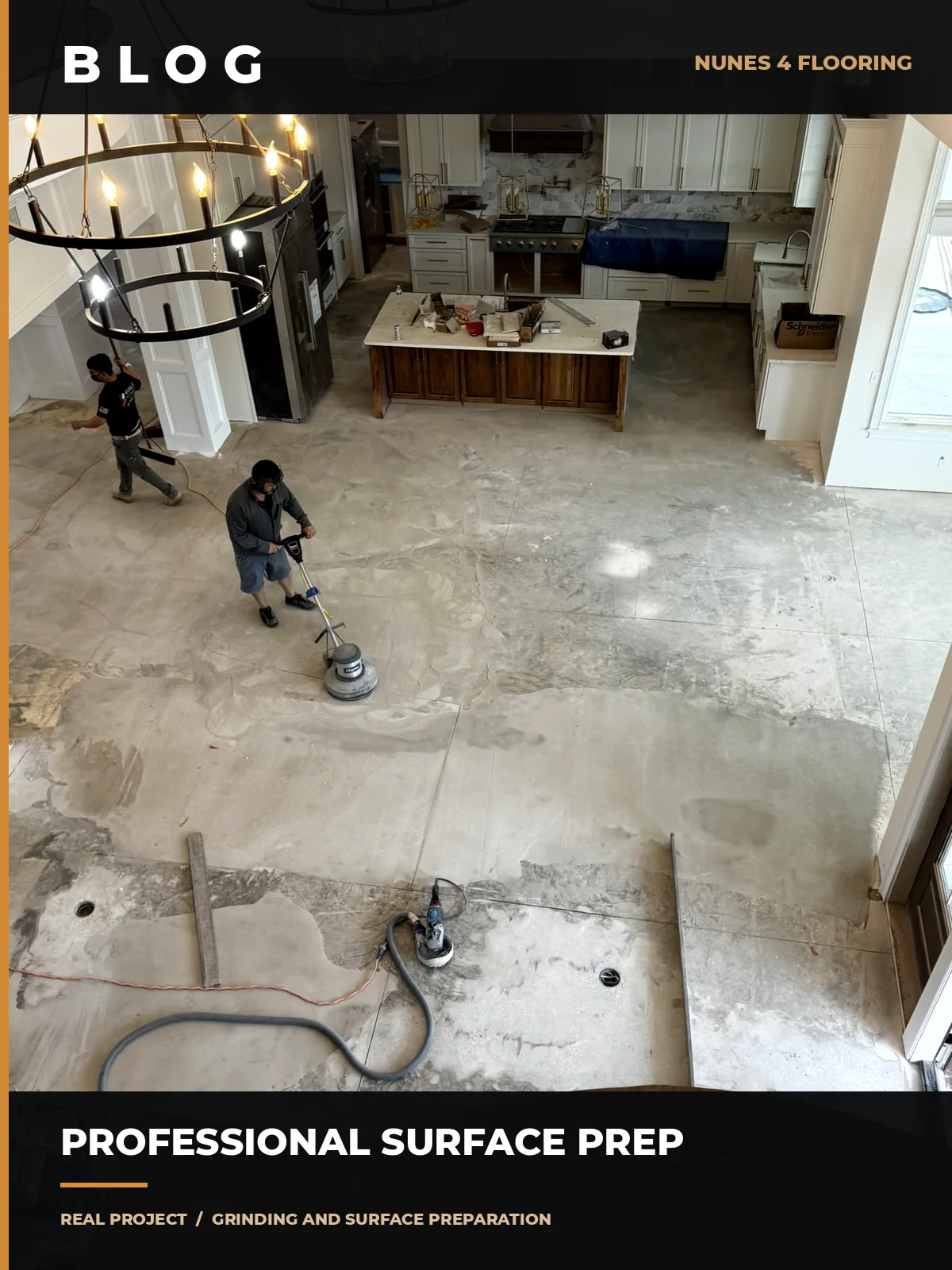
A beautiful new floor starts beneath the surface. Whether you are choosing luxury vinyl plank (LVP), modern laminate, or engineered hardwood, the condition of your existing subfloor affects how the finished floor looks, feels, and performs.
In Jacksonville, Ponte Vedra, St. Augustine, and surrounding Northeast Florida communities, homeowners often focus on plank color, thickness, and durability. Those choices matter. But a substrate that is uneven, damp, loose, or contaminated can create installation challenges even when the product itself is premium.
Quick answer: Before new flooring goes down, check that the substrate is sound, clean, sufficiently flat, and within the flooring system’s moisture requirements. The correct preparation depends on the product, its installation method, and the existing surface. “Waterproof” flooring does not make moisture problems beneath it disappear.
FIELD NOTES / FROM REAL JOBSITES
1. Flat vs. Level: Why the Difference Matters
These words are often used interchangeably, but they describe different conditions. A level surface has no overall slope. A flat surface does not have unacceptable dips, humps, or waves when checked across the span specified by the flooring manufacturer. A floor can slope slightly and still meet a product’s flatness requirement; it can also look level and have localized irregularities.

Flatness matters for floating plank floors because the planks and their locking joints need appropriate support. An irregular substrate can contribute to movement, unwanted noise, visible gaps, or excessive stress on the joints. For glue-down flooring, an unsuitable surface can also interfere with adhesive performance.
As one wood-flooring reference point, the National Wood Flooring Association’s revised 2025 installation guidance describes flatness of 3/16 inch over 10 feet or 1/8 inch over 6 feet for certain floating and glue-down wood applications, unless the wood flooring manufacturer specifies otherwise. Those figures are not a universal tolerance for all LVP or laminate products. Always use the actual product’s published instructions. NWFA Installation Guidelines.
Corrections may include grinding down high spots, using compatible patching or smoothing materials in low areas, or replacing loose or deteriorated subfloor sections. The goal is not to pour leveling compound everywhere; it is to address the actual conditions and meet the selected floor system’s requirements.
2. Moisture Considerations for Florida Concrete Slabs
Humidity is part of life in Northeast Florida, but outdoor humidity and moisture coming through a concrete slab are not the same issue. Before installation, homeowners should understand whether their project has a concrete slab or a wood subfloor, whether there are signs of past water intrusion, and which moisture-testing method the flooring or adhesive manufacturer requires.
For wood flooring, the NWFA specifically calls for evaluating and documenting moisture conditions, including testing concrete substrates before installation. The test method and acceptable result vary with the system; there is no single moisture limit that safely applies to every plank, underlayment, and adhesive combination.
Why “waterproof LVP” is not a substitute for slab inspection
Many LVP products have water-resistant or waterproof plank constructions, but that claim describes the product within its stated conditions. It does not mean that trapped moisture, elevated vapor emissions, existing water damage, or a failed moisture-control strategy can be ignored. Manufacturer limitations and installation warranty requirements still apply.
Some laminate products also offer improved moisture resistance. When comparing them, ask for the product’s documented water-exposure tests, edge or joint performance, and warranty exclusions. The North American Laminate Flooring Association (NALFA) publishes performance and optional assembled-joint swelling certification information to help make these comparisons more meaningful. NALFA Certification Standards.
3. Does Preparation Change for LVP, Laminate, and Engineered Hardwood?
| Flooring type | Key pre-installation questions | What to confirm |
|---|---|---|
| Rigid-core LVP | Are there dips, ridges, deep grout joints, or moisture concerns? | Specific flatness and vapor requirements; underlayment compatibility; permitted substrates. |
| Laminate | Is the substrate dry, sound, and suitable for a floating floor? | Moisture and expansion guidance; approved underlayment; product-specific joint and water resistance. |
| Engineered hardwood | Are the wood and subfloor conditions compatible with the installation method? | Moisture readings, acclimation or conditioning, adhesive or vapor-control system, and NWFA/manufacturer guidance. |
For bedrooms, sound underfoot and the feel of the floor can be just as important as appearance. If you are still comparing materials, read our bedroom flooring guide for Florida homes. If laminate is your preferred finish, explore our laminate installation service.
4. Can New Flooring Go Over Existing Tile?
Sometimes, but not by default. The existing tile must be securely bonded, free of unstable or damaged areas, clean, sufficiently flat, and approved as a substrate for the new flooring system. Deep or wide grout joints, raised tile edges, cracks, and adhesive contamination may need attention before any overlay is considered.
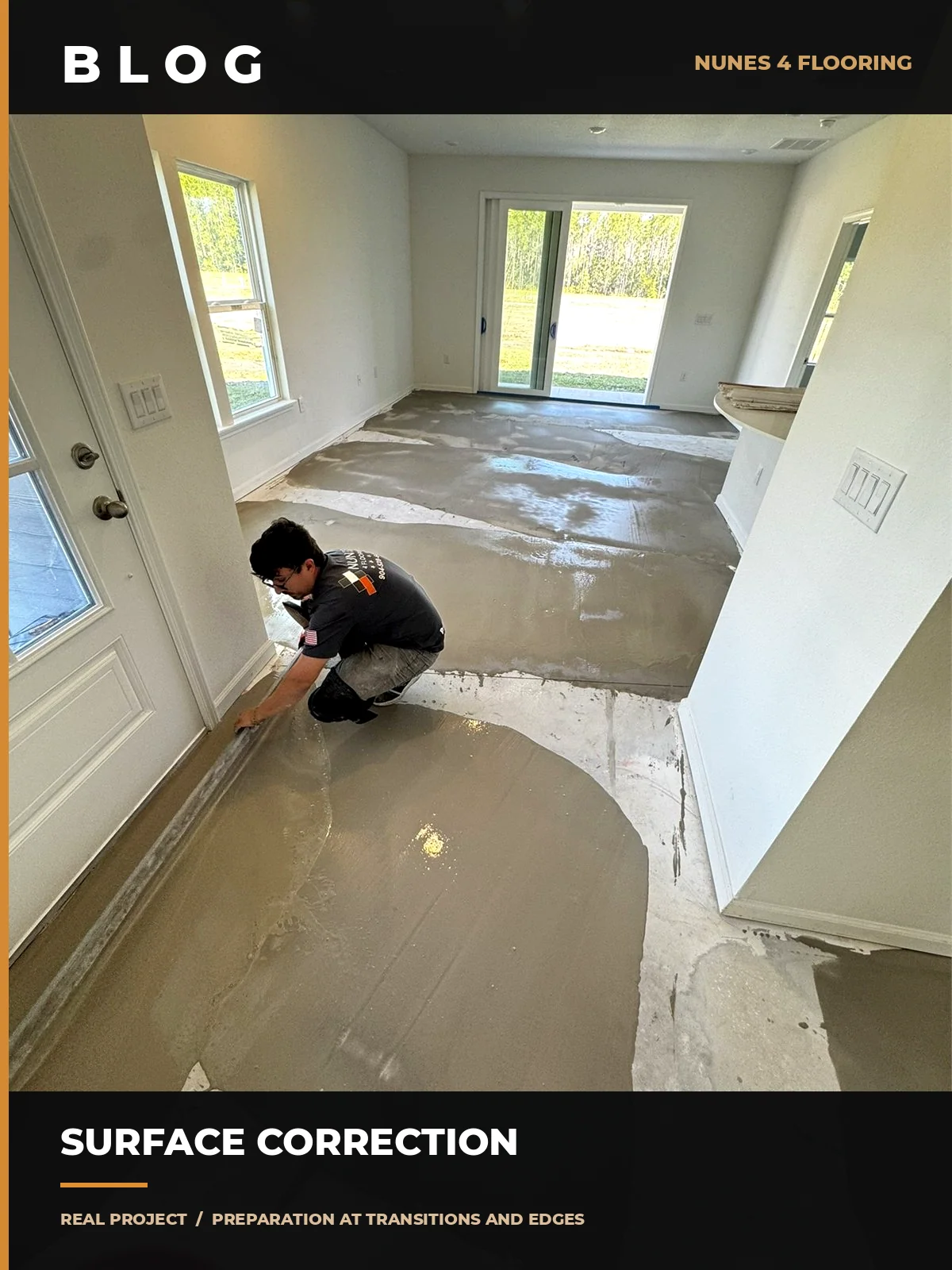
Adding a new layer can also affect door clearance, kitchen appliance removal, adjacent floor heights, and transitions. In some homes, removing the existing flooring produces a more predictable result; in others, proper surface preparation makes an overlay reasonable.
For more detail on when overlaying can work, see our existing guide: Can You Install LVP Over Existing Tile or Floors?
5. What a Professional Pre-Installation Assessment Covers
There is no need to commit to extensive preparation before anyone has inspected the floor. A well-scoped flooring estimate should identify the existing substrate, known trouble spots, and the preparation assumptions that could change the job price.
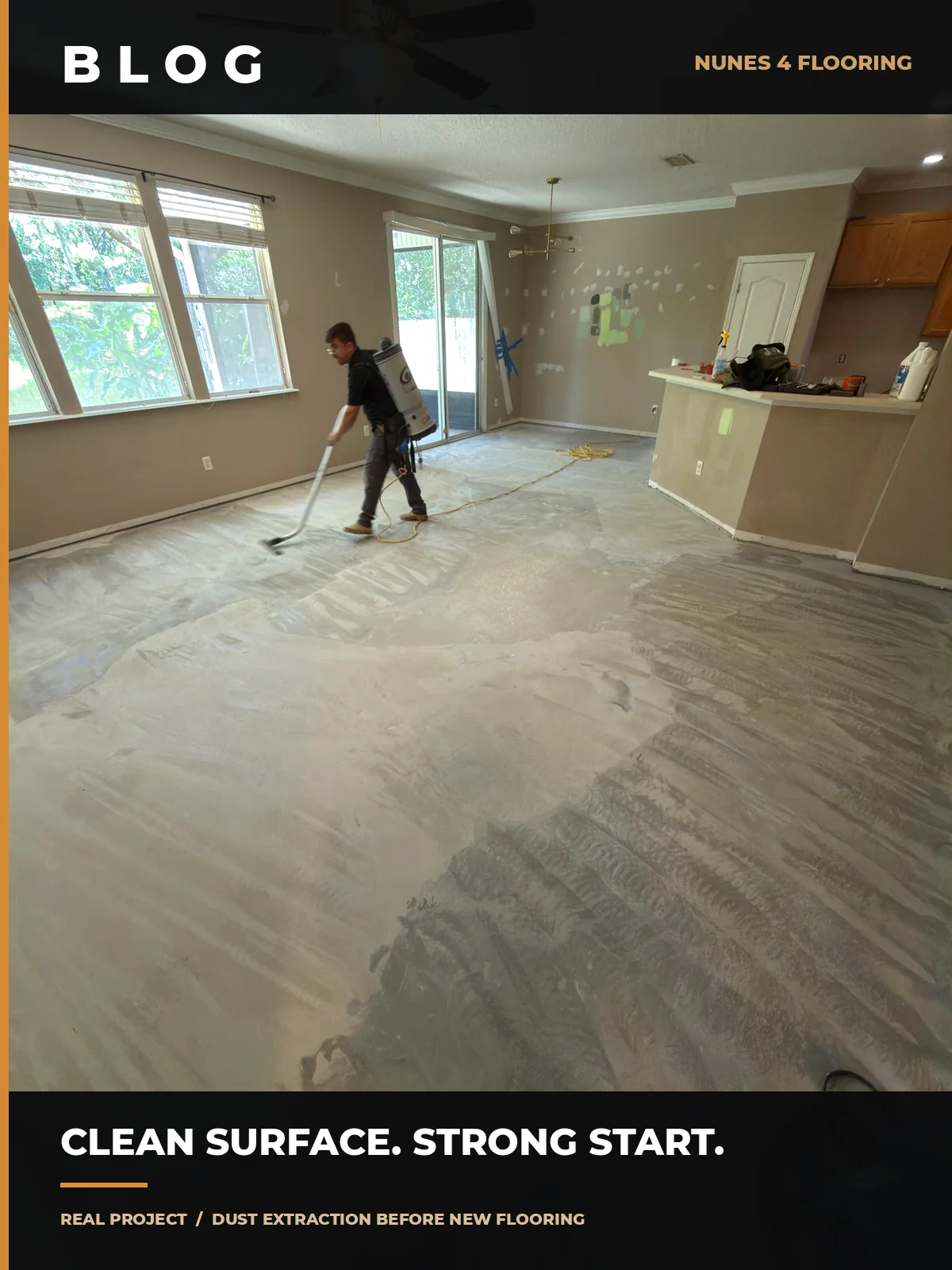
- Inspect the surface: look for cracks, loose tile, damaged wood panels, squeaks, movement, and contamination.
- Check flatness: measure and document relevant high and low areas against the selected product’s instructions.
- Evaluate moisture: determine which test and moisture-management approach are appropriate for the substrate and floor system.
- Plan transitions: check heights at doors, hallways, baths, and adjoining flooring.
- Agree on scope: identify what is included, what is optional, and what discoveries would require a separate approval.
For homeowners around Jacksonville, Ponte Vedra Beach, and St. Augustine, this process helps compare estimates on an apples-to-apples basis. Two proposals that look similar on the surface may include very different assumptions about floor preparation.
6. What Affects Subfloor Preparation Cost?
Prep pricing depends less on the finish color and more on the existing conditions. Localized patching in one room is a different project from extensive grinding, damaged-subfloor replacement, or a full moisture-control system. The cost also changes with access, total square footage, furniture, demolition, drying time, and the approved installation products.
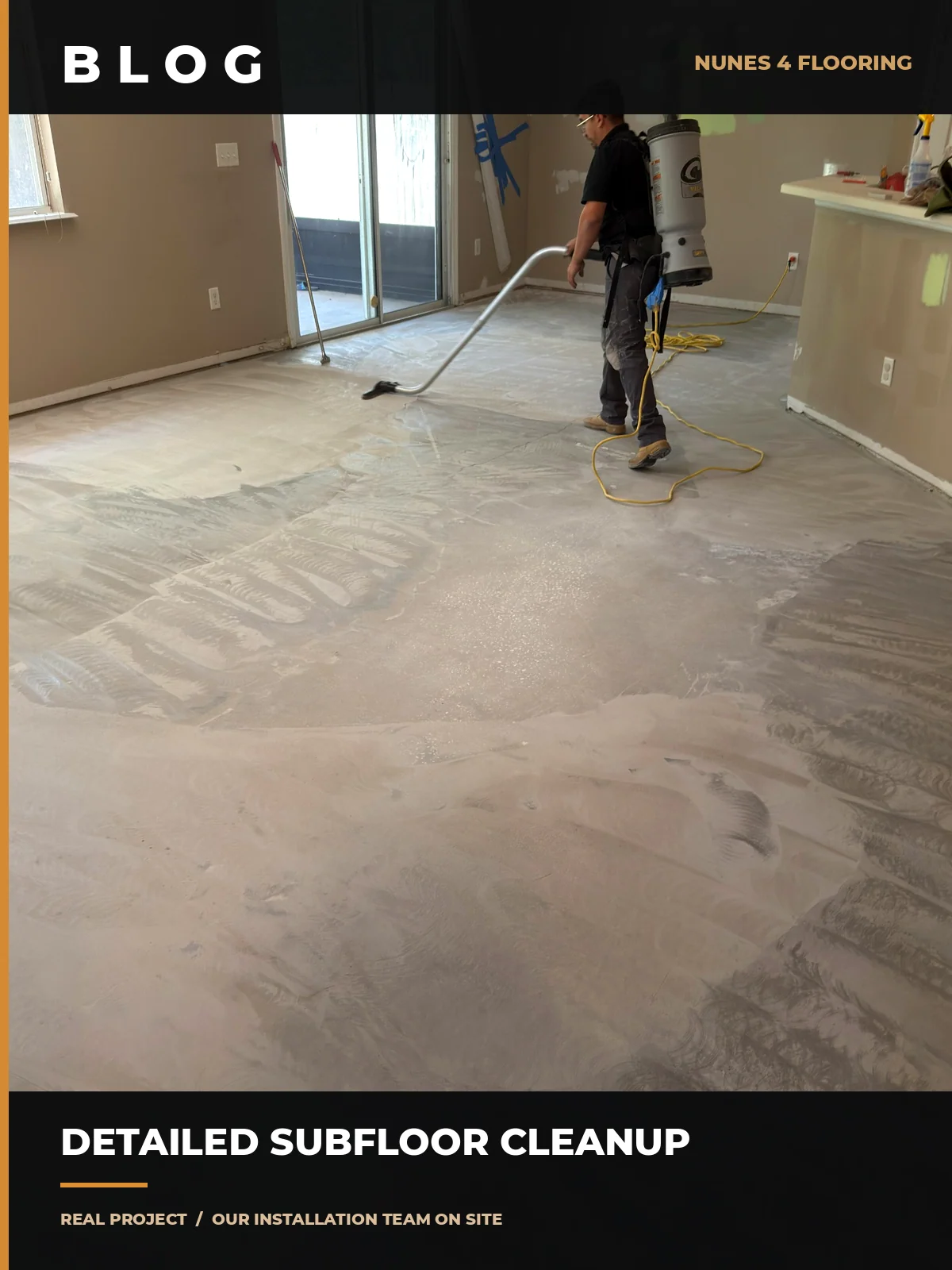
Be cautious of estimates that appear unusually inexpensive but exclude subfloor assessment or all corrective work without explaining the consequence. Likewise, do not assume that every job needs the most extensive prep package. The right decision comes from measured conditions and product requirements, not a one-size-fits-all sales pitch.
Before you approve an estimate, ask: “What flatness specification are we using? How will moisture be evaluated? Which preparation tasks are included? What happens if the existing floor needs additional work?” Clear answers protect scheduling, budgeting, and the long-term performance of your new flooring.
Frequently Asked Questions
Does a new floating floor need to be perfectly level?
Not necessarily. It needs to meet the flooring manufacturer’s flatness and substrate requirements. Overall slope and local flatness are different concerns, and significant slopes may still need separate evaluation.
Can thicker LVP hide an uneven subfloor?
No plank thickness should be treated as permission to ignore the manufacturer’s flatness limits. Some products perform differently over minor surface texture, but locking joints still need proper support.
Is moisture testing important for engineered hardwood over concrete?
Yes. Wood flooring and its installation materials have moisture-related requirements. For concrete applications, follow the wood, adhesive, and moisture-control system manufacturers’ current instructions and applicable NWFA guidance.
Does laminate work in a Florida bedroom?
It can be a strong option for a dry, properly conditioned bedroom when the selected laminate and underlayment suit the room and substrate. Compare the product’s actual water-resistance documentation and warranty instead of relying on generic “waterproof” marketing claims.
Will subfloor repair increase installation cost?
It can. The amount depends on what the inspection finds and what the approved flooring system requires. Request an itemized scope so you understand what is included and what is conditional.
Plan the Floor From the Bottom Up
Considering LVP, laminate, or engineered hardwood in Jacksonville, Ponte Vedra, St. Johns, or St. Augustine? Nunes 4 Flooring can review the space, discuss material options, and prepare a clear estimate that accounts for the existing subfloor.
Related Flooring Guides
Technical References
National Wood Flooring Association: Wood Flooring Installation Guidelines (revised 2025). Refer to the product and system manufacturers for project-specific limits.
North American Laminate Flooring Association: Product Certification Standards. These describe laminate performance and water-exposure testing, not a blanket guarantee for every laminate product.
2 Responses